Wildlife Exclusion
The permanent fix: close every way in before something moves in.
What we do about it
Wildlife exclusion is about closing the opportunities animals rely on, not just reacting after they’ve already moved in. Homes and businesses offer exactly what wildlife is looking for — warmth, quiet, food, and shelter — and once an animal finds a gap or a weak spot in the building, it settles in and starts expanding. Some species test weak points relentlessly; others slip in quietly and go unnoticed for a long time. Either way, a real exclusion plan accounts for the specific animal and the specific building, not a generic seal-it-all approach.
How it works
Inspect
We find what's active, where it's coming from, and what's attracting it.
Treat
Targeted treatment at the source, using Integrated Pest Management, not blanket spraying.
Protect
Seal, monitor and follow up. Unlimited callbacks for covered pests on a plan.
What to know
A thorough inspection first
Animals rarely use large, obvious openings — many squeeze through gaps no wider than a couple of fingers. We check rooflines, vents, soffits, plumbing intersections, and aging construction joints, and we read the signs (claw marks, nesting material, tracks, droppings) to identify which species is involved, since that changes the approach.
Sealing that actually holds
We seal entry points with materials built to withstand chewing, pushing, and weather, while making sure ventilation and drainage still function properly — the goal is a barrier that doesn’t interfere with how the building actually works. We also flag the building conditions that tend to invite repeat attempts: damaged shingles, deteriorating vents, rotting siding, loose screens. These rarely look urgent on their own, but they’re exactly where wildlife tends to target next.
Once they're out, keep them out
Rodent coverage is included in our Comprehensive Rodent & Pest Defense Plan, starting at $65/month, with unlimited callbacks. It’s the easiest way to make sure the next scratching in the attic never happens.
What wildlife exclusion is, and why it's the part that solves the problem
Wildlife exclusion means finding every way an animal is getting into your home and closing those openings with materials the animal can’t get through. It’s different from trapping or removing animals, which only deals with the animals that are already there. If the openings stay open, the next animal arrives and the cycle starts again.
It’s also usually the most cost-effective part of any wildlife job over the long run. A removal without exclusion can lead to repeat visits every season. Exclusion changes the house, not just the population around it. That’s why we treat it as part of nearly every raccoon, squirrel, bat, skunk and groundhog job, and why you can also have it done on its own before a problem starts.
The entry points we find most often
Most wildlife problems start at the same handful of places. Our inspections cover the whole structure, from the roofline down to the foundation.
- Roofline: Gaps at fascia and soffits, damaged or missing drip edge, gable vents, ridge vents and the places where rooflines meet
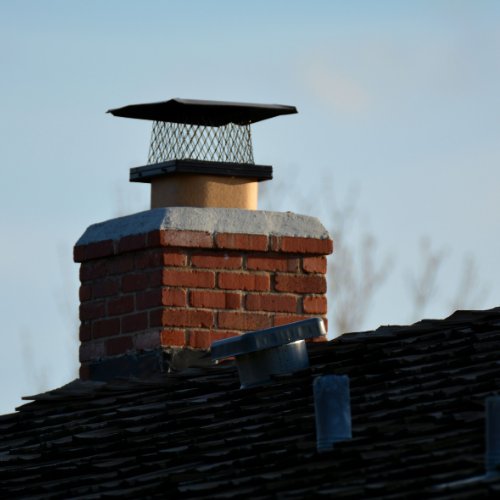
- Chimney: Missing or damaged caps, gaps in the flashing and open flues
- Vents: Dryer, bath, kitchen and attic vents with flimsy or broken covers
- Decks, porches and sheds: Open space underneath where skunks, groundhogs, raccoons and opossums den
- Foundation and crawlspace: Gaps, broken vents and loose access doors
- Garage: Worn door seals and gaps at the corners and along the walls
- Utility lines: Spots where cable, gas, electric and AC lines enter the house
Our extension-pole equipment lets us reach up to 24 feet from the ground, so we can inspect and treat upper stories without ladders.
Materials and methods that hold up
The material matters as much as the location. Animals like squirrels, raccoons and groundhogs chew, claw and pull at repairs, and anything flimsy fails quickly.
- Heavy-gauge steel mesh and hardware cloth for vents, soffit gaps and larger openings
- Properly fastened chimney caps sized for the flue
- Reinforced or metal vent covers in place of thin plastic ones
- Metal flashing and trim for roof edges and corners
- Buried or skirted barriers around decks, sheds and porches, so digging animals can’t tunnel in underneath
- One-way exit devices when animals are still inside and the season allows
Foam, caulk and thin wood patches don’t last against persistent animals, which is why we avoid relying on them.
Which animals exclusion works for
Exclusion applies to nearly every animal that tries to get into your house. See our pages on raccoons, squirrels, bats, skunks, groundhogs and birds for the specifics on each, and rodent control for mice and rats. The inspection works out which animal is involved, and the plan fits it, since a skunk under a deck and a bat in a gable need very different solutions.
Why winter is the right time to exclude
Late fall and winter are the best times to close up a house. Animals are looking for dens, and many are already testing roof edges and vents. Breeding season for raccoons and squirrels begins in January and February, and a gap you close in winter is a gap that can’t become a nursery in March.
It’s also easier to spot activity during the cold months. Trees are bare, so roof access points are more visible, and there are fewer complications from nesting wildlife. Waiting until spring risks sealing animals in, or finding young animals in the walls.
How a wildlife exclusion job goes
The process is simple and starts with a free inspection.
- Inspection: We look at the whole house and note every opening, sign of activity and area of damage.
- Plan and estimate: You get a clear explanation of what we found and what the work involves, before anything is done.
- Removal, if needed: If animals are present, we deal with them first, in a way that fits the season and the situation.
- Sealing and repairs: We close the openings with durable materials and repair damage that created them.
- Cleanup, if needed: Our wildlife clean-up service handles contaminated areas.
We serve Mercer, Somerset and Middlesex counties in New Jersey and Central and Lower Bucks County in Pennsylvania. Request a free estimate or call 609-356-PEST (7378).
Common wildlife exclusion mistakes
Many homeowners try to handle exclusion themselves and run into the same few problems. Knowing them helps whether you do some of the work yourself or hire it out.
- Sealing before the animals are out. This is the most expensive mistake. Animals trapped inside will chew new exits, often in a worse place, or die in the walls.
- Using the wrong material. Spray foam, steel wool alone, plastic screening and thin sheet metal all fail against determined animals.
- Missing the secondary entry. Animals usually have more than one way in. Closing only the obvious hole leaves the real one open.
- Ignoring the cause. Rotted fascia, missing flashing and overhanging branches all invite the next animal. Repairing the opening without addressing why it formed lets the problem recur.
- Waiting for babies. Once young are in the house, the options narrow and the job gets more involved.
A professional inspection catches these before the work begins, and is the quickest way to know whether you need a small repair or a full exclusion job.
Frequently asked questions
Which animals cause the most trouble for properties?
Raccoons commonly take over attics and tear through insulation. Squirrels slip through small roofline gaps and chew wiring. Bats settle into dark, undisturbed spaces and leave behind strong odors. Birds can clog vents and nest in structural cavities. Each requires a different exclusion approach.
Why do animals keep testing the same structure even after repairs?
Many rely on routine and memory of past shelter — they’ll test the same spot again during stressful seasons or when food is scarce elsewhere. If any gaps, rotted trim, or weak vents remain, they’ll find them. Thorough, complete sealing is what actually breaks that cycle.
What are the earliest signs an animal is exploring a building?
Faint scratching above ceilings or inside walls, droppings near corners, torn insulation, unusual debris around vents, or a subtle new odor. Animals gathering near rooflines or repeatedly returning to the same spot outside is also an early signal worth acting on.
Wildlife Exclusion near you
We’re based in Lawrence Township, NJ and work across Mercer, Middlesex and Somerset counties, plus Bucks County, PA. Town pages for this service, and the county pages that cover everything we do there:
Central New Jersey
Ready to get your home back?
Contact us today to schedule an inspection. Closing the door before something gets in is a lot less disruptive than removing it after.