
Bat Removal And Control
Humane, season-aware exclusion and guano clean-up.
What we do about it
Bats matter to the ecosystem — they handle a lot of insects — but a colony in your attic is a different story. It takes a gap no wider than a thumb for them to get in and start roosting, and once they do, their droppings (guano) build up fast, bringing odor, staining, and a real respiratory health risk from fungal spores. Scratching at night and dark streaks near rooflines are usually the first signs something’s already settled in.
How it works
Inspect
We find what's active, where it's coming from, and what's attracting it.
Treat
Targeted treatment at the source, using Integrated Pest Management, not blanket spraying.
Protect
Seal, monitor and follow up. Unlimited callbacks for covered pests on a plan.
What to know
Timing is everything with bats
Removal has to work around bat biology, not just convenience. We assess activity in the evening when bats leave to feed, identify the species (which determines colony size and behavior), and time the work carefully — exclusion can’t happen during maternity season, when flightless young are still inside, or you risk trapping them and making the problem worse.
How exclusion actually works
We install one-way devices over entry points that let bats exit to feed but block them from getting back in. Once the colony has fully left, we seal every opening with materials built to hold up against weather and further attempts to get back in. After that, cleanup: guano, nesting debris, and any contaminated insulation are removed with the right protective equipment, because leftover residue is both a health issue and an invitation for the next colony.
Once they're out, keep them out
Rodent coverage is included in our Comprehensive Rodent & Pest Defense Plan, starting at $65/month, with unlimited callbacks. It’s the easiest way to make sure the next scratching in the attic never happens.
Why bats end up in houses, and what you'll notice in winter
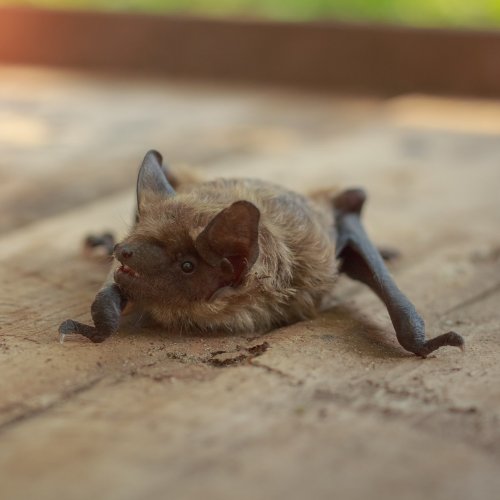
The bat most often found in homes in New Jersey and Pennsylvania is the big brown bat, and it’s a surprisingly adaptable animal. Bats roost in attics, wall voids, behind siding and under roof edges, and some of them spend the cold months there, either hibernating or sliding in and out of torpor during mild spells. A gap about the width of your thumb, or even smaller, is enough for a bat to get in.
Winter is a quieter season for bats, but it’s often when people first find out they have them. On a mild afternoon, a bat that has been roosting in a wall can wake up and end up in a living space. Droppings that built up over the summer can also start to cause odors or show up as staining on ceilings once the heating comes on. That’s why a bat in the house in January isn’t unusual, and it’s usually a sign that there’s a colony or a roosting spot somewhere in the structure.
Signs of bats in your attic or walls
Bats leave different evidence than mice or squirrels. They don’t chew or build nests, so the signs are subtler.
- Guano (droppings) that look like mouse droppings but crumble to powder when pressed, and often collect in piles under roosting spots or below an entry point
- Dark, oily stains or rub marks around small gaps in siding, fascia, roof edges and vent openings
- Squeaking, chirping or rustling in walls or the attic, especially at dusk and dawn
- A musty, ammonia-like smell that gets stronger in warm weather
- Bats seen flying around the house at dusk during the warmer months
- Droppings or stains on siding, windows or decks near the roofline
If you find one bat inside, it’s usually not alone. A single animal in a living space is often a scout from a roost in the walls or attic.
Bats are protected, so timing and method matter
Bats are valuable animals. They eat huge numbers of insects, and bat populations in the Northeast have dropped sharply in recent years because of white-nose syndrome, a fungal disease. That’s a big part of why bats are protected in both New Jersey and Pennsylvania, and why the rules for removing them are different from the rules for squirrels or raccoons.
In practice, the timing comes from state guidance. New Jersey’s bat exclusion guidelines say not to exclude bats from roosts from May 1 to July 31, because flightless pups can be left to die inside, and to do exclusions only from April 1 to April 30 and from August 1 to October 15. From October 16 through March 31, when bats may be hibernating in the building, exclusion can only go ahead if the bats are confirmed absent, which takes an acoustic survey and contact with the state’s Endangered and Nongame Species Program first. Lethal methods are prohibited for bats. Pennsylvania doesn’t publish exact dates on its nuisance wildlife page, but the Game Commission also advises against excluding bats in summer, when attics can hold maternity colonies, and suggests waiting until late fall, when bats head to their winter hibernation sites. Because those windows are narrow, a bat problem found in the middle of winter is usually handled by planning the exclusion for the next open window, while sealing the other gaps that people use to get into living areas. We’ll tell you what’s possible given the season when we inspect.
Health risks and what to do if a bat gets into your living space
Bats are a rabies risk, so handle any contact seriously. If a bat is found in a room where someone was sleeping, or in a room with a young child or a person who can’t say whether they were bitten or scratched, call your doctor or local health department right away. Bat bites can be tiny and hard to see. Never handle a bat with bare hands, and if it’s safe to do so, contain it in a room so it can be tested if needed.
The other concern is guano. A large buildup in an attic can grow a fungus that causes histoplasmosis, a lung infection that spreads when dried droppings are disturbed and the spores become airborne. This is the reason not to sweep or vacuum bat droppings yourself, and a major reason that cleanup after a bat colony should be done with the right protective equipment. See our wildlife clean-up service for the contaminated areas.
How bat exclusion works
Inspection to find every opening
Bats use small gaps, and there’s usually more than one. We look closely at the roofline, gable ends, fascia, soffits, chimney, siding and any spot where two materials meet. Watching where the bats leave at dusk, when the timing allows, is one of the best ways to find the main entry.
One-way exits, not traps
When the season permits, bats are excluded using one-way devices placed over the main entry. They can leave to feed at night but can’t get back in. The other openings are sealed first, so the bats have only one way out. In New Jersey, the guidelines call for leaving the devices in place for at least a week, including at least three consecutive nights with temperatures above 50 degrees, light wind and no sustained rain, and confirming on the last night that all the bats have left. Only then is the last opening permanently sealed.
Permanent sealing
Exclusion that lasts means using durable materials like metal flashing, mesh and sealant rated for exterior use, and addressing the structural gaps that let bats in. We also look at the conditions that make a spot attractive, like warm, south-facing walls and roof edges with gaps.
What doesn't work
Mothballs, ultrasonic devices, smoke and bright lights don’t solve a bat problem, and some of them are hazardous. They don’t address how the bats are getting in, and they can drive bats deeper into the structure or into living spaces.
Bat removal across New Jersey and Bucks County
We serve homes across Mercer County, Somerset County, Middlesex County and Central and Lower Bucks County. See also bat removal in Hopewell Borough, our wildlife exclusion service and squirrel removal.
Request a free estimate or call 609-356-PEST (7378).
Frequently asked questions
How do you remove bats without harming them?
Exclusion — one-way devices let the colony leave on its own to feed, then we seal the openings once everyone’s out. It’s humane, effective, and aligned with wildlife protection standards for what are, in most states, protected species.
What are the clearest signs bats are already living in a structure?
Fluttering or scratching sounds at night, dark staining near vents or eaves, and droppings collecting in corners or along beams. A musky odor or new staining on walls and ceilings usually means the colony’s been established for a while.
Why not just handle this myself?
Timing and legal protections make this trickier than most DIY pest situations. Removing bats at the wrong time of year can trap flightless young inside, and improper handling risks exposure to contaminants in guano. Getting the timing and sealing right the first time is what actually keeps them from coming back.
Bat Removal near you
We’re based in Lawrence Township, NJ and work across Mercer, Middlesex and Somerset counties, plus Bucks County, PA. Town pages for this service, and the county pages that cover everything we do there:
Central New Jersey
Ready to get your home back?
Contact us today if you’re hearing activity at night or noticing stains near your roofline. We’ll handle it humanely, and we’ll handle it completely.