
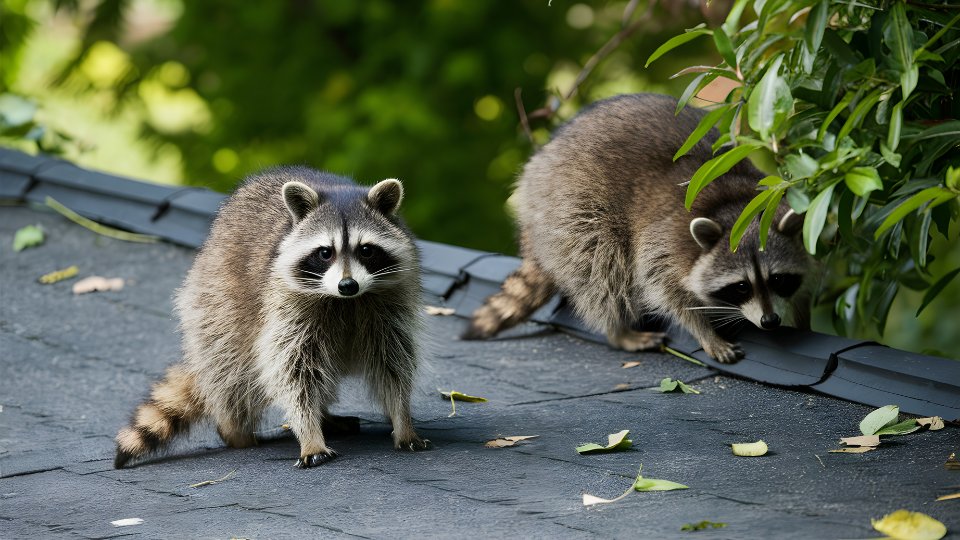
Ask anyone who has lived through it: a raccoon in the attic is not a small problem. It’s a twenty-pound animal with hands, a habit of using one corner of your insulation as a bathroom, and, in Mercer County, a very good chance of being pregnant by February. We handle raccoon calls from Trenton to Hopewell all winter, and the same questions come up every time: how did it get in, is it dangerous, can I just trap it myself, and what does it cost to make sure this never happens again. Here is the honest version of all four.
Why raccoons pick Mercer County houses
Raccoons are edge animals. They want woods and water nearby and a reliable food source, and they’ve figured out that a suburban neighborhood offers all three better than a forest does. Mercer County is built for them: the Sourland Mountain and Baldpate ridges behind Hopewell and Pennington, the D&R Canal running through Princeton, Lawrence and Trenton, Mercer County Park and the Assunpink corridor through Hamilton and Robbinsville, and thousands of homes with trash cans, bird feeders, pet food on the porch and a roofline that hasn’t been looked at in a decade.
Cold weather pushes them toward structures. Raccoons don’t hibernate, but they do slow down, and a female looking ahead to a spring litter wants a den that is dry, dark, warm and off the ground. Your attic is exactly that. So is an uncapped chimney, which from a raccoon’s point of view is a hollow tree with a heated base. Once a raccoon finds a way in, it’s not looking for another house; it’s staying.
How they actually get in
People assume there must be a big hole. Usually there isn’t, at least not at first. Raccoons are strong, patient and curious, and they test the weak spots on a house the same way water does. On the older homes in Princeton, Pennington and Hopewell Borough, the most common entry we find is the joint where a porch roof or a later addition meets the main roof. Those seams open a little more every winter, the wood behind them softens, and a raccoon that finds a two-inch gap will make it a six-inch gap in a night.
On the mid-century houses in Hamilton, Ewing and Lawrence, it’s usually a soft section of fascia board behind a gutter, a soffit panel that has sagged, or a gable vent whose louvers are aluminum but whose screen is long gone. Chimneys without caps are a close third across the whole county. And on any house, a roof vent or plumbing stack with a plastic cover is a raccoon toy; they pull them off for fun.
The tell-tale signs from the ground are grease and fur around an opening, insulation hanging out of a soffit, and, in snow, tracks leading to a downspout or a tree limb that touches the roof. Inside, it’s heavy, deliberate movement after dark, sometimes chattering or growling, and a strong smell in one specific corner.
The part about disease, briefly and without drama
Raccoons are one of the main carriers of rabies in New Jersey, and their droppings can carry raccoon roundworm, which is a serious health concern for people and pets. That doesn’t mean every raccoon in an attic is sick. It does mean a homeowner shouldn’t be crawling into an attic latrine with a shop vac, and it does mean a raccoon behaving strangely in daylight, staggering or unafraid of people, should be reported rather than approached. It’s also why the clean-up part of the job matters as much as the removal.
Why we don’t recommend trapping it yourself
Hardware stores sell cage traps, and every winter we get calls from homeowners who caught a raccoon and then realized they had no idea what to do with it. New Jersey regulates the trapping and relocation of wildlife, and the rules exist for good reasons: relocated raccoons rarely survive, they can spread disease to new areas, and a trapped animal with kits still in the attic leaves you with a worse problem than the one you started with. Those kits will die in the walls, and you’ll find out where by smell.
Our raccoon removal approach avoids all of that. We inspect first to figure out whether we’re dealing with one adult or a mother with young, because the answer changes everything. Then we use one-way doors and exclusion wherever we can, which let the raccoon leave on its own schedule and not come back, and humane trapping only where the situation calls for it. We follow the state’s rules on timing and handling, especially during the spring birthing season when a mother needs to be reunited with her kits rather than separated from them.
Removal is the easy part
Getting the animal out takes a few days. What actually ends a raccoon problem in Mercer County is what happens after, and it’s the part a lot of companies skip.
First, the whole envelope gets sealed, not just the hole the raccoon used. A raccoon that’s been in an attic has usually tested several spots, and the next one will find whichever you left open. We close rooflines, soffit returns, gable vents and chimney tops with hardware cloth, metal flashing and properly fitted caps, because raccoons go through foam and plastic like they aren’t there. That’s our wildlife exclusion work, and it’s the reason our raccoon jobs don’t turn into annual events.
Second, the attic gets cleaned. Raccoon latrines soil insulation, and the scent left behind draws the next raccoon and, after it, the mice. We remove contaminated insulation and droppings with proper protective equipment, deodorize, and tell you honestly whether the insulation needs to be replaced. That’s the wildlife clean-up side of the job, and skipping it is how a house gets a reputation in the raccoon community.
What it looks like town by town
The job changes with the housing. In Robbinsville, where Town Center and Washington Woods back onto the Assunpink wildlife management area, we see raccoons using tree limbs to reach newer roofs with clean lines and one or two vulnerable vents; those are usually quick seals. In Hopewell Township, with the Sourlands and Baldpate behind Titusville and Elm Ridge, we’re dealing with older farmhouses and outbuildings, multiple entry points and animals that have been using the property for years. In Trenton’s Mill Hill and Chambersburg, uncapped chimneys and shared rooflines on rowhouses mean the raccoon in your attic may have come from three doors down. And in Hamilton, Ewing and Lawrence it’s almost always the fascia and soffits on houses that all reached sixty years old at the same time.
What it costs, and how to think about it
We quote raccoon work after a free inspection because the range is wide: one adult, one entry point and a light clean-up is a very different job from a family of five, four openings and a ruined attic. What we can tell you is that the inspection is free, the estimate is written, and we’ll tell you the least you need to do to actually solve it. Early in the season it’s cheaper. By March it’s a bigger job with more rules around it.
After the raccoon work, most homeowners put the house on our Comprehensive Rodent & Pest Defense Plan, because the gaps raccoons open are the gaps mice use next. It includes rodent control inside and out, four seasonal visits, and someone checking the sealed entry points before anything tests them again. The details are on our plans and pricing page.
What to do tonight if you’re hearing it
Questions we get about this
How long does raccoon removal take?
Usually three to seven days from the first visit. The inspection and one-way door installation happen on day one; the raccoon leaves to feed within a night or two and can’t get back in; we confirm the attic is empty, then seal and clean. A mother with kits takes longer because we time it so she can move them, and during the spring birthing season New Jersey rules limit what can be done and when.
Will the raccoon come back after you seal the house?
Not through the sealed openings, which is the point of using hardware cloth, flashing and real chimney caps instead of foam. Raccoons do test a house again after a removal, sometimes for weeks, which is why we seal the whole envelope rather than the one hole and why we recommend clearing tree limbs that touch the roof. If something does get through a covered opening, you call us and we come back.
Is a raccoon in the attic covered by homeowners insurance?
Usually not for the removal itself, though some policies cover damage to wiring or structure caused by animals. Check with your carrier. What we can do is give you a written estimate and a clear description of the damage, which is what an adjuster will want if you do file.
Do you handle raccoons in Bucks County too?
Yes. We cover Mercer, Middlesex and Somerset counties in New Jersey and Bucks County, Pennsylvania, from Plumsteadville and Doylestown down to Bensalem, with the same approach and the same rules-first handling on both sides of the river.
Don’t seal anything. Don’t go into the attic. Bring pet food inside, lock the trash, and if there’s a bird feeder near the house, take it down. Then call us at 609-356-PEST (7378) or request a free inspection. We’re on Franklin Corner Road in Lawrence Township, twenty minutes from anywhere in Mercer County, and raccoons are the call we take most this time of year. Our full wildlife removal services cover squirrels, bats, skunks, groundhogs and birds too, because in this county it’s rarely just one animal.