
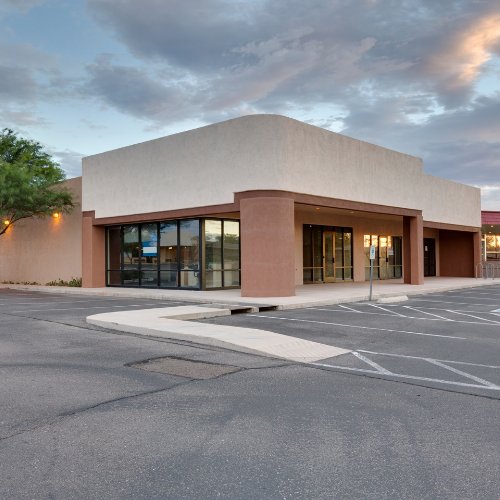
A mouse in a dining room in Mercer County isn’t a maintenance issue. It’s a health inspection score, a one-star review with a photo, a tenant complaint that becomes three tenant complaints, and in the worst case a lease problem. Winter is when it happens, because the same cold nights that push mice into houses push them into restaurants, apartment buildings, offices and warehouses, and commercial buildings offer more of what mice want than any house does. Here is how rodent pressure works in commercial space around the county, and what the businesses that don’t have a problem do differently.
Why commercial buildings get it worse
Homes have one kitchen, one trash can and a few doors. A restaurant has a prep line, a walk-in, a dry-storage room, a grease trap, a dumpster corral and a back door that’s propped open during deliveries. An apartment building has dozens of kitchens on shared plumbing and wall chases, a trash room, and a turnover of tenants with different habits. Offices have break rooms, drop ceilings and loading docks. Warehouses have dock doors that stay open, pallets that never move, and flat roofs with rooftop units. Every one of those is a food source, a harborage or an entry, and mice only need one of each.
Location adds to it. The restaurant rows in Princeton, Lawrenceville and along Route 33 in Hamilton, the commercial corridors on Route 1 and Route 130, the older mixed-use blocks in Trenton and Hightstown with apartments over storefronts, and the warehouse and light-industrial parks in Robbinsville, Ewing and West Windsor all sit next to the creeks, rail lines and wooded edges that keep rodent populations going year-round. Our Mercer County commercial accounts are mostly in exactly those places.
Why winter, specifically
Commercial rodent pressure has a season, and it’s the same one homeowners see. The first sustained cold in late October pushes mice off the exterior and toward heated buildings, and a restaurant or apartment building is heated, full of food and open more hours than a house. Activity climbs through November, peaks in the dead of winter when there is nothing to eat outside, and eases in April when the population moves back out. A building that gets its sealing and station placement done in October is defending against a trickle; one that starts in January is fighting an established population that has already been breeding indoors for two months.
The other winter factor is deliveries. Cold weather means doors get propped less, but it also means more deliveries stacked inside near the receiving door, more cardboard, and more product sitting on the floor where mice can reach it. The receiving area is where most commercial rodent problems in Mercer County start, and it’s the first place we look on a winter walkthrough.
Restaurants and food service
For a restaurant the stakes are on paper. A health inspector who finds droppings behind the line or in dry storage writes it up, and in New Jersey that write-up can be public. What separates the kitchens that pass from the ones that don’t is rarely cleanliness; it’s whether someone is walking the building on a schedule, whether the back door seals when it’s closed, whether the gap around the gas line behind the range has ever been filled, and whether there’s a service log on file when the inspector asks for it.
Our restaurant pest control program is built around that: a scheduled cadence that fits the operation, monitoring and bait stations placed where they belong and away from food, sealing at the doors, the dock and the utility penetrations, and a written log after every visit that says what we found, where, and what we did about it. Between visits, a call gets a callback at no charge for covered pests. Winter is when we tighten the cadence, because winter is when the mice test the back door.
Apartments, multifamily and HOAs
In multifamily, mice don’t live in an apartment. They live in the building, moving through the wall chases, the plumbing runs and the drop ceilings from one unit to the next, and the tenant who calls is usually not the tenant whose unit is the source. Treating one unit at a time is the most expensive possible way to handle it, because the problem just relocates and the complaints keep coming.
Our property management pest control work treats the building as one system: common areas, trash rooms, utility rooms, exteriors and vacant units on a schedule, occupied units as needed with notices coordinated through your office, and the entry points on the building envelope sealed so the pressure drops instead of moving around. The townhouse communities in East Windsor and Hamilton, the apartment complexes along Route 1 in Lawrence and West Windsor, and the older walk-ups in Trenton all run on that model with us. Property managers get one number, one vendor, and a log they can hand to an owner or an inspector.
Offices, retail and warehouses
Offices get mice through the break room and the loading dock and hide them in the drop ceiling, where nobody looks until the smell starts. Retail gets them through the receiving door and the stockroom. Warehouses are the big one: dock doors open for hours, pallets that sit for months, product that’s food or packaged in cardboard, and flat roofs where rooftop units give rodents and birds a way in from above. Our office and warehouse pest control is scheduled around your operating hours, focused on dock seals, exterior stations along the building perimeter, interior monitoring in the places mice actually travel, and documentation for the audits that a lot of these facilities face.
What the winter visit looks like
It starts with a walkthrough, not a price sheet. We inspect the property, identify what’s active and what’s likely, and put together a plan sized to the building. On a commercial rodent visit that usually means exterior bait stations along the foundation and near the dumpster corral, interior monitoring and stations along the runways, door sweeps and dock seals checked and replaced, utility penetrations sealed with materials rodents can’t chew, and a look at the roofline and rooftop units. Then the log: what we found, what we treated, where, and with what. If a health inspector, auditor, property owner or insurer asks for your pest records, they exist.
We also handle the wildlife side, because commercial buildings get raccoons on flat roofs, pigeons on rooftop units and groundhogs under loading docks, and having one vendor for rodents and wildlife means no gap between them.
What managers can do this month
Walk the exterior at closing and look at every door from the inside with the lights off; daylight at the bottom means mice have a door. Get the dumpster corral cleaned and the lids closed. Move pallets and stored product off the floor and away from the walls. Fix the propped-open back door habit, or install a self-closer. Have someone look above the drop ceiling in the break room and the mechanical room. And get the pest log started, even if it’s a notebook, because the inspector doesn’t care that you had a plan; they care that you can show it.
Getting a quote
Questions we get about this
How often should a restaurant be serviced in winter?
Monthly is the floor for most food service in winter, and busier kitchens or ones with a history of activity are better on a two-week cadence from November through March. We set the schedule after the walkthrough based on the building, the neighbors and what we find, and adjust it if the log shows activity between visits.
Can you service the building after hours?
Yes. Most of our restaurant, office and retail visits happen before opening or after close, and warehouse visits are scheduled around dock traffic. Occupied apartment units are scheduled through your office with tenant notices.
What documentation do you provide?
A written log after every visit: what we found, where, what we treated and with what, plus a map of station locations. It’s the file a health inspector, auditor, franchisor or insurer asks for, and it’s yours to keep.
Do you sign contracts, or is it month to month?
We put the cadence, coverage and callback terms in a written proposal so there are no surprises, and we’d rather keep an account by doing the work than by locking anyone in. Ask for the proposal and you’ll see exactly what’s included.
Commercial work is quoted after the walkthrough because a forty-seat restaurant, a two-hundred-unit complex and a warehouse on Route 130 are three different jobs. The walkthrough is free, the proposal is written, and the cadence, coverage and callbacks are spelled out so there are no surprises when something shows up between visits. Our commercial pest control page has the overview; the quickest route is to request a commercial quote or call 609-356-PEST (7378) and ask for Rudy. We’re based on Franklin Corner Road in Lawrence Township, in the middle of the county, and same-week walkthroughs are the norm.